




Best PSU for RTX 5070 Ti? Quick answer
For the GeForce RTX 5070 Ti graphics card, you need a power supply with a capacity of at least 750 W. This is an official requirement from NVIDIA, based on a configuration with the Ryzen 9 9950X processor.
| CPU | CPU while gaming | GPU + CPU while gaming | Our PSU pick |
|---|---|---|---|
| Ryzen 7 7800X3D | 58 W | 358 W | 750 W |
| Ryzen 5 9600X | 75 W | 375 W | 750 W |
| Ryzen 7 9700X | 77 W | 377 W | 750 W |
| Ryzen 7 9800X3D | 80 W | 380 W | 750 W |
| Core Ultra 7 265K | 93 W | 393 W | 750 W |
| Ryzen 7 9850X3D | 102 W | 402 W | 750 W |
| Core Ultra 9 285K | 111 W | 411 W | 750 W |
| Ryzen 9 9950X3D | 126 W | 426 W | 750 W |
| Ryzen 9 9950X (GPU maker's reference setup) | 132 W | 432 W | 750 W |
| Core i9-14900K | 166 W | 466 W | 850 W |
| Core i7-14700K | 178 W | 478 W | 850 W |
CPU power: TechPowerUp, average of 14 games, CPU only. GPU: board power from the manufacturer (RTX 5070 Ti: 300 W). Motherboard, memory, drives and fans draw extra, hence the headroom in the pick.
CPU power draw: TechPowerUp, 14-game average, CPU only. GPU power draw: rated board power from the manufacturer (RTX 5070 Ti: 300 W). Motherboard, RAM, drives, and fans consume additional power, hence the buffer in the recommendation.
In the table above, you can check the recommended PSU wattage paired with your CPU. We stick to the rule of never dropping below the 750 W threshold recommended by the GPU manufacturer in any build.
Why do we recommend a more powerful 850 W unit in certain configurations? NVIDIA's reference build is based on the Ryzen 9 9950X processor, which averages 132 W on the EPS 12 V connector during gaming. If you use an Intel Core i7-14700K processor drawing an average of 178 W in games, or a Core i9-14900K consuming 166 W, choosing an 850 W unit is safer.
However, most typical gaming processors require less power. TechPowerUp tests show that the Ryzen 7 7800X3D consumes an average of 58 W in games, the Ryzen 5 9600X draws 75 W, the Ryzen 7 9700X needs 77 W, and the Core Ultra 7 265K consumes 93 W. With these CPUs, a 750 W power supply will handle everything with ease.
Is a 750 W power supply enough for RTX 5070 Ti and what about lower wattages
The power consumption of the RTX 5070 Ti, rated as Total Graphics Power, is exactly 300 W. Independent gaming benchmarks show that the RTX 5070 Ti 16 GB alone draws an average of 279 W, which makes a quality 750 W power supply completely sufficient for everyday use.
However, you need to account for transient power spikes lasting fractions of a second. In tests, 20 ms power spikes for this card reach up to 346 W. When such a spike coincides with a sudden CPU load, an underpowered PSU may trigger safety protections and shut down the PC.
A 650 W power supply falls below NVIDIA's official minimum. We do not recommend 650 W units for this card, as you risk system instability in demanding games.
Planned component overclocking is an entirely different story. According to MSI's recommendation chart, a 750 W power supply is sufficient for standard gaming with any processor, but overclocking increases the requirements. In that case, 750 W is only enough for a Ryzen 5 or Core Ultra 5; for Ryzen 7 CPUs, X3D models, and Core Ultra 7, the manufacturer recommends 850 W, while for Ryzen 9 and Core Ultra 9, it specifies a 1000 W power supply.
Fun fact: The 12V-2x6 connector replaced the earlier 12VHPWR. According to Corsair, the sense pins are 1.5 mm shorter, while the power pins are 0.25 mm longer, ensuring the card receives full power only when the plug is fully seated.
Connecting the card: new 12V-2x6 connector or classic 8-pin plugs
The RTX 5070 Ti card requires a PCIe Gen 5 cable in the 12V-2x6 standard rated for at least 300 W, or two traditional 8-pin PCIe cables. NVIDIA includes a dedicated adapter with the card, so you can also connect it to an older type of power supply.
However, not all models on the market use the new connector type. MSI notes that some lower-priced RTX 50 series card models come equipped with classic 8-pin sockets from the factory instead of the 16-pin connector. It is always worth checking before purchasing which connectors a specific card manufacturer has used.
If you choose a power supply with a dedicated 12V-2x6 cable, pay attention to its wattage rating. The 300 W cable on the NZXT C750 Gold Core power supply meets the requirements of the RTX 5070 Ti, but it will not support the more powerful RTX 5080, which requires a 450 W cable.
Below are power supplies with wattage and cabling that meet NVIDIA's requirements for the RTX 5070 Ti.
Recommended PSUs for the RTX 5070 Ti
As an Amazon Associate I earn from qualifying purchases.

1. Corsair RM750e (2025)
750 W · Cybenetics Gold · ATX 3.1 · 12V-2x6 600 W
Fully modular, with a native 12V-2x6 cable rated up to 600 W and Zero RPM mode. A solid choice if you want headroom for a more powerful processor or your next GPU upgrade. 7-year warranty.

2. NZXT C750 Gold Core
750 W · 80 PLUS Gold · Cybenetics Platinum · modular
Fully modular, featuring a 135 mm fan with Zero RPM mode and a 7-year warranty. The 12V-2x6 cable here is rated for 300 W: plenty for cards that require a 300 W cable, but not meant for the RTX 5080 (450 W).

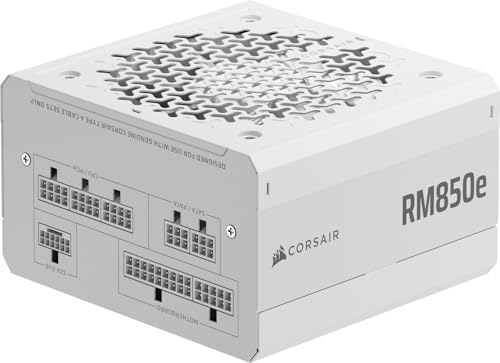
3. Corsair RM850e (2025)
850 W · Cybenetics Gold · ATX 3.1 · 12V-2x6 600 W
Fully modular, featuring a native 12V-2x6 cable rated up to 600 W and Zero RPM mode where the fan stops completely under light loads. 7-year warranty.
What to look for when choosing a power supply
NVIDIA recommends choosing a power supply compliant with the PCIe CEM 5.1 specification. Look for units labeled as ATX 3.1 and PCIe 5.1 in stores.
Power supplies compliant with the ATX 3.1 standard are designed to handle high power spikes out of the box. For example, be quiet! Pure Power 12 series models can handle power spikes reaching up to twice their rated wattage, while also offering a 120 mm fan and a 10-year warranty.
Another important factor is high efficiency confirmed by 80 PLUS Gold or Cybenetics Gold and Platinum certifications. The higher the efficiency, the less electricity turns into heat, making quiet cooling easier. In power supplies such as Corsair RMe or NZXT C750 Gold Core, you will find a Zero RPM mode where the fan remains completely still under light loads.
Consider installation convenience as well. Fully modular cabling allows you to connect only the cables you need, making cable management inside the case much easier. Also, pay attention to the manufacturer warranty, which typically ranges from 7 to 10 years on high-quality models.
Questions and answers about power supplies for RTX 5070 Ti
Is a 650 W power supply enough for RTX 5070 Ti?
A 650 W power supply is not recommended for this graphics card. NVIDIA officially specifies a 750 W minimum for an RTX 5070 Ti setup. Although the card draws an average of 279 W while gaming, short power spikes reach up to 346 W, which, combined with the CPU, can cause a weaker power supply to shut down under load.
Is a 750 W power supply enough for RTX 5070 Ti?
Yes, a 750 W power supply is the official minimum recommended by NVIDIA. Such a unit is entirely sufficient for standard gaming with most CPUs on the market, which is also backed by MSI guidelines. A more powerful model is mainly useful for heavy overclocking or when paired with very demanding Core i7 and Core i9 processors.
Which power supply for RTX 5070 Ti and Ryzen 7 9800X3D?
For a build with the Ryzen 7 9800X3D processor, a 750 W power supply is an optimal choice. This chip is very energy-efficient and, according to tests across 14 games, draws an average of just 80 W on the EPS 12 V connector. An ATX 3.1 750 W power supply leaves plenty of headroom with it.
When is an 850 W power supply worth getting for RTX 5070 Ti?
An 850 W power supply is worth choosing if your PC runs a Core i7-14700K (178 W in gaming) or Core i9-14900K (166 W in gaming) processor, which draw significantly more power than the baseline Ryzen 9 9950X. The extra wattage will also come in handy when overclocking components, as MSI recommends a more powerful unit in that scenario for Ryzen 7, X3D models, and Core Ultra 7 processors.
Can I connect the RTX 5070 Ti using an adapter from two 8-pin connectors?
Yes, NVIDIA includes a stock adapter for two traditional PCIe 8-pin cables with the card. You can safely use it if your power supply does not feature the new 16-pin connector. Alternatively, you can use a single PCIe Gen 5 cable rated for at least 300 W, provided your power supply has one.
Sources
- NVIDIA: GeForce RTX 5070 family - specifications - manufacturer page (nvidia.com)
- TechPowerUp: NVIDIA GeForce RTX 5060 8 GB review - power consumption - industry article (techpowerup.com)
- TechPowerUp: AMD Ryzen 7 9850X3D review - power consumption and efficiency - industry article (techpowerup.com)
- MSI: Recommended PSU table for NVIDIA 30/40/50 series - industry article (msi.com)
- Corsair: Evolving standards - 12VHPWR and 12V-2x6 - industry article (corsair.com)
- be quiet!: Pure Power 12 - manufacturer page (bequiet.com)
- Corsair: RMe Series 2025 - manufacturer page (corsair.com)
- NZXT: C Series Gold Core (2025) specs - manufacturer page (support.nzxt.com)

Leave a comment
This site is protected by hCaptcha and the hCaptcha Privacy Policy and Terms of Service apply.