






Best PSU for RTX 5080? Check recommendations
For the GeForce RTX 5080 graphics card, you need a power supply of at least 850 W. This is officially recommended by NVIDIA, which calculated this requirement for a PC equipped with an AMD Ryzen 9 9950X processor.
| CPU | CPU while gaming | GPU + CPU while gaming | Our PSU pick |
|---|---|---|---|
| Ryzen 7 7800X3D | 58 W | 418 W | 850 W |
| Ryzen 5 9600X | 75 W | 435 W | 850 W |
| Ryzen 7 9700X | 77 W | 437 W | 850 W |
| Ryzen 7 9800X3D | 80 W | 440 W | 850 W |
| Core Ultra 7 265K | 93 W | 453 W | 850 W |
| Ryzen 7 9850X3D | 102 W | 462 W | 850 W |
| Core Ultra 9 285K | 111 W | 471 W | 850 W |
| Ryzen 9 9950X3D | 126 W | 486 W | 850 W |
| Ryzen 9 9950X (GPU maker's reference setup) | 132 W | 492 W | 850 W |
| Core i9-14900K | 166 W | 526 W | 1000 W |
| Core i7-14700K | 178 W | 538 W | 1000 W |
CPU power: TechPowerUp, average of 14 games, CPU only. GPU: board power from the manufacturer (RTX 5080: 360 W). Motherboard, memory, drives and fans draw extra, hence the headroom in the pick.
CPU power consumption: TechPowerUp, average across 14 games, CPU only. GPU power consumption: card power specified by the manufacturer (RTX 5080: 360 W). Motherboard, memory, drives, and fans consume more, hence the headroom in the recommendation.
The table above shows the minimum recommendations for specific processors on the market. If your CPU consumes more power in games than the baseline Ryzen 9 9950X, it is safer to choose a 1000 W unit.
Is 850 W enough and what about smaller power supplies
The RTX 5080 card features a Total Graphics Power rating of 360 W. Measurements by TechPowerUp show that during gaming, the card itself draws an average of 296 W, but its brief, 20-millisecond power spikes reach up to 423 W.
A high-quality 850 W power supply will handle typical gaming use with most popular processors. For example, the Ryzen 7 7800X3D draws an average of 58 W in games, the Ryzen 7 9800X3D around 80 W, and the Core Ultra 7 265K draws 93 W.
The situation changes when you plan to overclock your hardware. According to MSI recommendations from September 2025, an 850 W power supply is sufficient for overclocking only when paired with Core Ultra 5 or Ryzen 5 processors. For Core Ultra 7, Ryzen 7, X3D processors, as well as the Core Ultra 9 and Ryzen 9 series, the manufacturer recommends a 1000 W power supply when overclocking.
If you are considering a 750 W power supply, you should know that it falls below NVIDIA's official minimum. Even with a more power-efficient CPU, 750 W units are not recommended for this card model due to the risk of overload during sudden power spikes.
Power connector and cable power limits
The RTX 5080 requires a connection using a single native PCIe Gen 5 (12V-2x6) cable rated at least 450 W. An alternative solution is using the adapter included by the manufacturer, which requires connecting three separate PCIe 8-pin cables from the power supply.
When choosing a power supply, you must pay close attention to the specifications of the included 12V-2x6 cable. Some power supplies on the market come with a cable limited to 300 W, such as the NZXT C750 Gold Core. Such a cable does not meet the requirements of the RTX 5080 and prevents it from being safely powered.
Good 850 W and 1000 W power supplies come factory-equipped with a 12V-2x6 cable rated for up to 600 W.
Fun fact: the connectors of 12V-2x6 cables in newer power supplies, such as the MSI MAG GLS PCIE5 series, have bright yellow plastic tips. This facilitates installation, as a quick glance at the socket is enough to make sure the cable is fully seated.
All power supplies in the list below feature a 600 W 12V-2x6 cable and comply with ATX 3.1.
Recommended PSUs for the RTX 5080
As an Amazon Associate I earn from qualifying purchases.

1. Corsair RM850e (2025)
850 W · Cybenetics Gold · ATX 3.1 · 12V-2x6 600 W
Fully modular, featuring a native 12V-2x6 cable rated up to 600 W and Zero RPM mode where the fan stops completely under light loads. 7-year warranty.

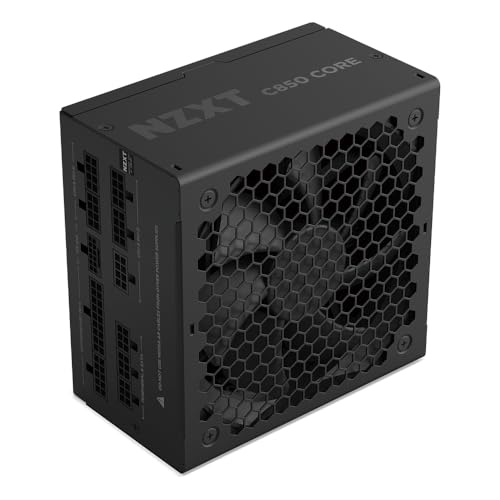
2. NZXT C850 Gold Core
850 W · 80 PLUS Gold · Cybenetics Platinum · 12V-2x6 600 W
Fully modular, with a 600 W 12V-2x6 cable and three 6+2-pin cables. 135 mm fan with Zero RPM mode and a 7-year warranty.

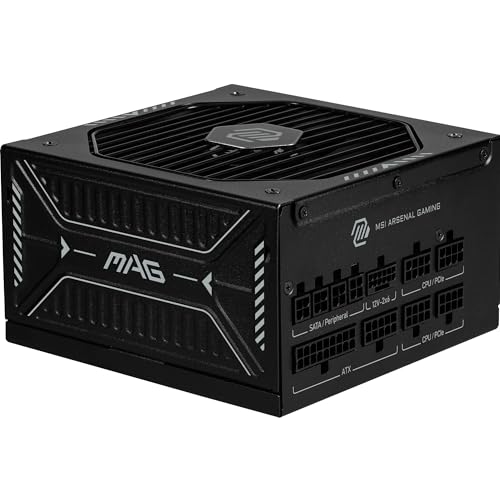
3. MSI MAG A850GLS PCIE5
850 W · 80 PLUS Gold · ATX 3.1 · 12V-2x6 600 W
Native 12V-2x6 cable rated up to 600 W with yellow connectors that make it easy to spot if it is not seated all the way. 135 mm fan with an FDB bearing.

4. MSI MAG A1000GLS PCIE5
1000 W · 80 PLUS Gold · ATX 3.1 · 12V-2x6 600 W
A tier up, built for high-end processors and overclocking. Native 12V-2x6 cable up to 600 W with yellow tips to prevent loose connections, plus a 135 mm FDB fan.
What to look for when buying a power supply for the RTX 5080
When looking for a new unit, focus on models that comply with the ATX 3.1 and PCIe 5.1 standards. These designs handle high power spikes well; for example, be quiet! Pure Power 12 power supplies handle spikes up to twice their rated power, and MSI claims spike resistance of up to 220% power for the A850GLS and A1000GLS series.
Choose power supplies with high efficiency, confirmed by an 80 PLUS Gold or Cybenetics Gold and Platinum certification. This translates into lower energy losses, lower temperatures, and quieter fan operation.
Many models, such as Corsair RM850e or NZXT C850 Gold Core, offer a Zero RPM mode where the fan turns off completely under low loads. If you value a tidy case interior, choose a fully modular power supply that makes cable management easier. Also pay attention to the warranty period, which is 7 or 10 years with reputable manufacturers.
Frequently asked questions about the power supply for the RTX 5080
Is a 750 W power supply enough for the RTX 5080?
No, a 750 W power supply is below the official minimum required by NVIDIA. The card can generate brief power spikes reaching up to 423 W, which is why power supplies with this wattage are not recommended for it.
Is an 850 W power supply enough for the RTX 5080?
Yes, an 850 W power supply is the officially recommended wattage by the card manufacturer for standard gaming use. It is sufficient for stable operation with most processors, provided you do not plan on advanced overclocking of high-end components.
Which power supply for RTX 5080 and Ryzen 7 9800X3D?
An 850 W power supply will be a very good choice for such a setup. The Ryzen 7 9800X3D processor consumes an average of only around 80 W in games, which, combined with the 360 W TGP of the graphics card, leaves plenty of headroom on an 850 W power supply. However, if you plan to overclock the processor, according to MSI recommendations, it is safer to consider a 1000 W unit.
When is it worth choosing a 1000 W power supply for the RTX 5080?
It is worth choosing a 1000 W power supply if you have a high-power processor, such as an Intel Core i7-14700K (178 W in games) or Core i9-14900K (166 W in games). A 1000 W unit is also recommended by MSI if you plan to overclock processors from the Ryzen 7, Ryzen 9, Core Ultra 7, or Core Ultra 9 series.
Can I connect the RTX 5080 using an 8-pin adapter?
Yes, you can power the card using the adapter included in the box by the manufacturer. However, the adapter requires connecting three separate PCIe 8-pin cables run directly from the power supply.
Sources
- NVIDIA: GeForce RTX 5080 - specifications - manufacturer page (nvidia.com)
- TechPowerUp: NVIDIA GeForce RTX 5060 8 GB review - power consumption - industry article (techpowerup.com)
- TechPowerUp: AMD Ryzen 7 9850X3D review - power consumption and efficiency - industry article (techpowerup.com)
- MSI: Recommended PSU table for NVIDIA 30/40/50 series - industry article (msi.com)
- Corsair: Evolving standards - 12VHPWR and 12V-2x6 - industry article (corsair.com)
- be quiet!: Pure Power 12 - manufacturer page (bequiet.com)
- Corsair: RMe Series 2025 - manufacturer page (corsair.com)
- NZXT: C Series Gold Core (2025) specs - manufacturer page (support.nzxt.com)
- MSI: MAG A1000GLS PCIE5 - manufacturer page (msi.com)

Leave a comment
This site is protected by hCaptcha and the hCaptcha Privacy Policy and Terms of Service apply.