







As an Amazon Associate I earn from qualifying purchases.
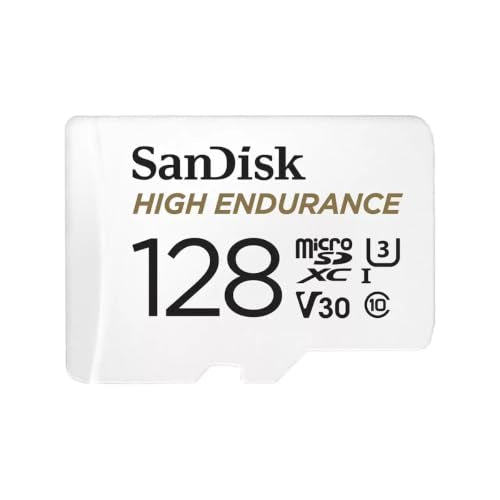
Quick answer: our top pick is SanDisk High Endurance 128 GB (128 GB · UHS-I · U3, V30 · up to 100 MB/s).
Best microSD card for a dash cam? The short answer
It is best to choose a high endurance card with U3 and V30 ratings. For most drivers, 128 GB is the most sensible capacity.
A regular camera or phone card wears out quickly in a dashcam, because it was not designed for continuous recording. You only see the difference after a few months.
If you are buying the 70mai A810 Lite, the manufacturer specifies a 4K front lens, a 1080p rear lens and support for microSD cards from 32 to 512 GB. It is a new model from 2026. The kits described by Mighty Gadget and Notebookcheck came with a 64 GB card, but with two cameras and 4K it is worth thinking right away about a larger and more durable one.


Why a dashcam wears out a card faster than a camera
According to Nexar, a dashcam records continuously in a loop. When the card fills up, it deletes the oldest footage and records new footage in its place. The memory is therefore written and overwritten every day, the whole time you drive.
Each memory cell withstands a limited number of write cycles. Regular cards have around 10,000, while high endurance cards have 30,000-100,000. This shows where the difference in durability comes from.
Fun fact: a regular camera card can wear out in a dashcam in 6-12 months (Nexar). The recordings then start to cut off or the card stops being recognized.
It is easy to confuse two parameters. The speed class (U3, V30) tells you how fast the card writes, so whether it can keep up with a 4K image. Endurance tells you how many writes the card can withstand. A card can be fast and still wear out quickly. According to Nexar, U3/V30 is a reasonable minimum for new dashcams, but it is not enough on its own.
For this roundup we chose SanDisk cards from the High Endurance and MAX Endurance series, because the manufacturer designs them for continuous recording in cameras and dashcams.

Recommended microSD cards for a dash cam
1. SanDisk High Endurance 128 GB
128 GB · UHS-I · U3, V30 · up to 100 MB/s
A card for continuous recording in security cameras and dash cams. SanDisk rates the 128 GB version for up to 10,000 hours of Full HD recording, less at 4K.
2. SanDisk High Endurance 256 GB
256 GB · UHS-I · U3, V30 · up to 100 MB/s
A card for continuous recording in security cameras and dash cams. SanDisk rates the 256 GB version for up to 20,000 hours of Full HD recording, less at 4K.

3. SanDisk High Endurance 512 GB
512 GB · UHS-I · U3, V30 · up to 100 MB/s
A card for continuous recording in security cameras and dash cams. SanDisk rates the 512 GB version for up to 40,000 hours of Full HD recording, less at 4K.

4. SanDisk MAX Endurance 128 GB
128 GB · UHS-I · U3, V30 · up to 100 MB/s
SanDisk's toughest series for continuous writing in cameras and dash cams. SanDisk rates the 128 GB version for up to 60,000 hours of Full HD recording.
128, 256 or 512 GB: how many recordings a card can hold
Capacity determines how long a stretch of driving stays on the card before overwriting begins. Nexar states how many loop recordings fit at 2K and 30 Mb/s:
- 64 GB: 4-6 hours,
- 128 GB: 8-12 hours,
- 256 GB: 16-24 hours.
Nexar considers 128 GB the sweet spot for most drivers. That is 8-12 hours of recordings before overwriting begins. Keep in mind that 4K from the front camera of the A810 Lite takes up more space than 2K, so on this model the card will fill up faster.
Capacity also affects durability. For High Endurance, SanDisk states the number of hours of Full HD recording the card is designed for: 64 GB is up to 5,000 hours, 128 GB up to 10,000, 256 GB up to 20,000, and 512 GB up to 40,000. At 4K the values are lower.
Fun fact: the endurance of High Endurance cards grows with capacity. The 128 GB version offers 10,000 hours, while 512 GB offers as many as 40,000 hours (SanDisk).
There is also a more robust series. SanDisk MAX Endurance offers up to 60,000 hours at 128 GB and up to 120,000 hours at 256 GB. If you drive a lot or the card needs to work for years, it is a sensible alternative to the standard High Endurance series. According to SanDisk, High Endurance operates at temperatures from -13°F to 185°F, which is useful in a car in both winter and summer.
A simple rule: 128 GB is enough for most people, choose 256 GB for two 4K cameras and longer routes, and 512 GB only if you care about maximum durability and a long recording history.
Formatting and replacing the card
Nexar recommends formatting the card every 1-3 months. Do it in the dash cam itself, not on a computer. The device will then set up the file system the way it needs it, and you will avoid read problems.
You will find formatting in the device settings. Before formatting, copy any recordings you want to keep, because everything will be deleted.
Replace the card when the dash cam reports a card error, recordings cut off, or files will not play. With a regular card, expect to replace it even after 6-12 months. High endurance cards have a clearly larger cycle margin, but they wear out too.
Most common questions about dash cam cards
What is the best microSD card for a dash cam?
The best is a high endurance card with U3 and V30 ratings. For most drivers, 128 GB is a good choice, for example SanDisk High Endurance. If you want a larger durability margin, consider SanDisk MAX Endurance.
Is a regular microSD card suitable for a dash cam?
Physically it will work, but it will wear out quickly. Regular cards have about 10,000 write cycles and, according to Nexar, may start failing after 6-12 months of use in a dash cam. A high endurance card has 30,000-100,000 cycles.
What card capacity should I choose for a dash cam?
Nexar considers 128 GB the sweet spot, because it is 8-12 hours of loop recordings at 2K and 30 Mb/s. With two cameras and 4K, consider 256 GB. According to Nexar, a 64 GB card holds 4-6 hours.
What card does the 70mai A810 Lite accept?
microSD cards from 32 to 512 GB (70mai). In the sets described by Mighty Gadget and Notebookcheck, a 64 GB card was included. For everyday driving, it is better to choose a high endurance card in the U3 and V30 classes.
How often should I replace the card in a dash cam?
There is no single deadline. A regular card may fail after just 6-12 months, while high endurance cards last longer. Replace it when card errors or cut-off recordings appear, and format it in the dash cam every 1-3 months.
See also
- Best microSD card for DJI Osmo Action 6 - DJI's list and the 1 TB limit
- Best microSD card for Insta360 X5 - UHS-I V30, not UHS-II
- Best microSD card for DJI Osmo Action 5 Pro - cards from DJI's list
Sources
- 70mai: Dash Cam 4K A810 Lite - manufacturer page (70mai.com)
- SanDisk: High Endurance microSD - manufacturer page (sandisk.com)
- SanDisk: MAX Endurance microSD - manufacturer page (sandisk.com)
- Notebookcheck: 70mai 4K A810 Lite dash cam review - industry article (notebookcheck.net)
- Mighty Gadget: 70mai Dash Cam 4K A810 Lite review - industry article (mightygadget.com)
- Nexar: Dash cam SD card guide - industry article (getnexar.com)

Leave a comment
This site is protected by hCaptcha and the hCaptcha Privacy Policy and Terms of Service apply.