




As an Amazon Associate I earn from qualifying purchases.
Quick answer: our top pick is Anker Zolo 10000 mAh 30 W (10,000 mAh · 30 W · built-in USB-C cable).
Mobile devices accompany us every day, which is why constant access to power can be essential. A power bank allows you to charge your phone, tablet, or headphones at any time without access to a wall outlet. However, choosing the right model depends on several important technical specifications.
What is a power bank and how does it work?
A power bank is a portable energy storage device that allows you to charge other electronic equipment when there is no access to an electrical outlet. Inside, there are rechargeable batteries that can be charged multiple times, making it ideal for traveling, fieldwork, or emergency situations.
Which technical specifications are key?
Capacity
One of the most important criteria when choosing a power bank is its capacity, measured in milliampere-hours (mAh). It is worth remembering that a power bank's capacity in mAh is specified for cells with a voltage of around 3.6-3.7 V, while the device is charged at 5-20 V via a converter, so some energy is lost along the way and less reaches the phone than the mAh rating suggests. Energy in Wh is calculated as voltage multiplied by capacity in Ah (e.g. 20 000 mAh x 3.6 V = 72 Wh).
The most commonly chosen capacities are:
- 5000 mAh - a lightweight and handy option in case your battery runs out during the day.
- 10000 mAh - a popular compromise between size and energy reserve.
- 20000 mAh and more - a useful solution for longer trips or for powering more demanding equipment.
Fun fact: 100 Wh is roughly 27 000 mAh at 3.6 V, which is why the largest power banks allowed in the cabin without airline approval are around 25 000-27 000 mAh.
Output power
Output power, meaning current and voltage, affects the charging speed of connected devices. Standard ports usually offer basic parameters of 5 V and 1-2.4 A. If fast recharging matters to you, choose a model that supports Quick Charge or USB Power Delivery (PD) technologies. For a laptop, you need a power bank with USB-C Power Delivery that provides at least the wattage required by the laptop (usually 45-65 W).
Number of ports
If you plan to charge more than one device at the same time, it is worth choosing a power bank with multiple USB ports. Models with two or three ports allow you to connect a phone, headphones, or an e-reader simultaneously. USB-C ports offer higher charging power and are a common standard in newer equipment.
Weight and size
A larger battery capacity directly translates into greater weight and size of the device. If you are looking for a model that will fit into a pocket, a 5000-10000 mAh option will be a practical choice. Larger models are best suited for carrying in a backpack or travel bag.
On an airplane, a power bank can only be carried in hand luggage; the FAA allows lithium-ion batteries up to 100 Wh, and 101-160 Wh only with airline approval (maximum two units); airlines may have stricter rules.
Fun fact: Spare batteries and power banks must travel in the cabin, not in checked baggage.
Additional features
Power banks also offer features that enhance everyday convenience:
- LED indicators or a display - indicators showing the exact charge level of the cells.
- Flashlight - helpful in emergency situations.
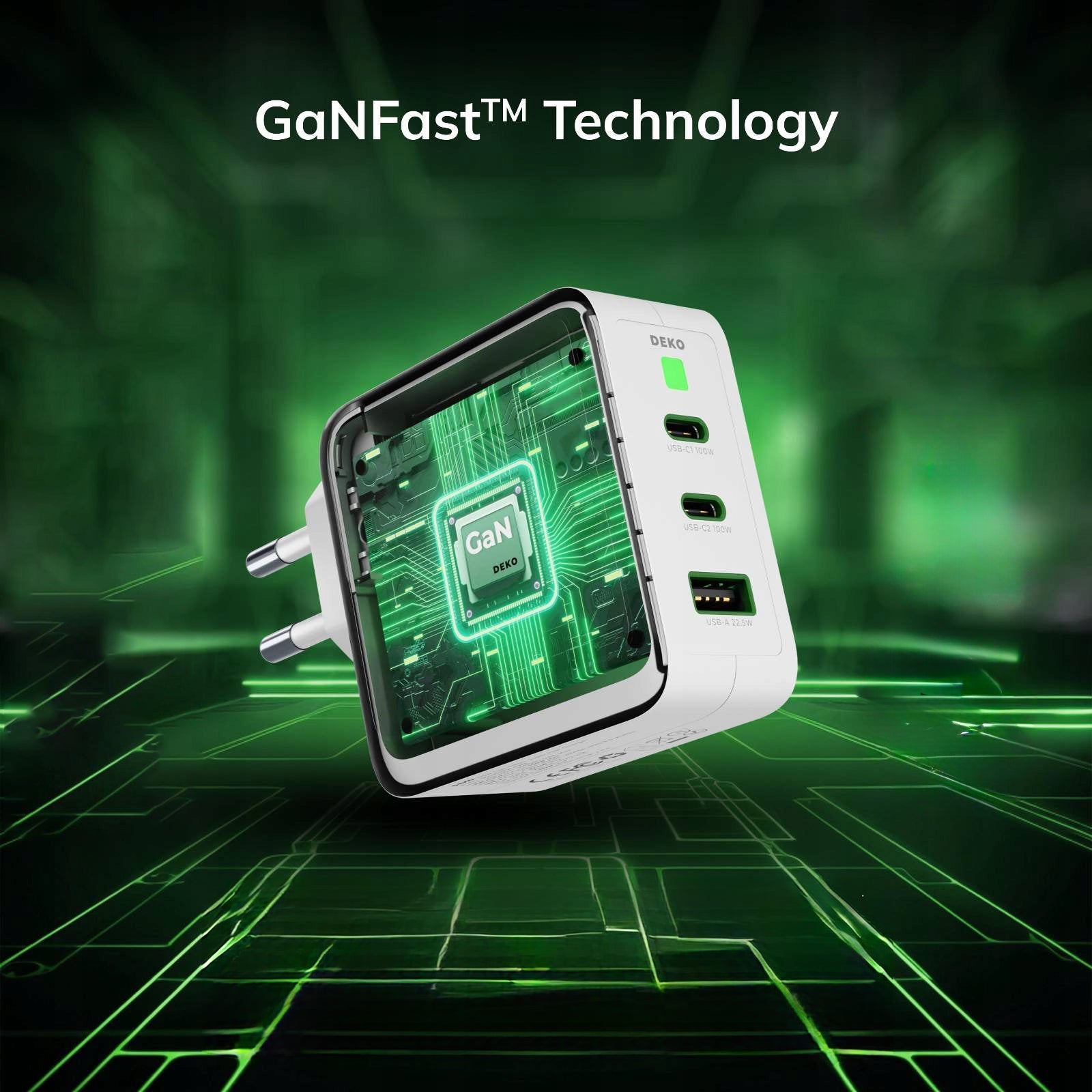
- GaN technology - the use of gallium nitride allows for smaller charger or power bank dimensions while maintaining high energy efficiency.
What else should you consider?
Safety
It is worth choosing devices equipped with protection systems against overheating, overload, and short circuits. Proper control circuits adjust the voltage and current in real time, protecting both the power bank and the connected phone.
Device compatibility
Before purchasing, make sure which fast charging protocols your devices support. In the case of Apple equipment and many modern laptops, Power Delivery is the standard. Keep in mind that Samsung and Pixel devices only charge at full speed with PPS.
Price vs. quality
Power bank prices vary depending on the cells used, supported protocols, and port power. Higher-quality components mean a longer battery life and stable performance under load, which is why it is worth being guided by technical specifications and user reviews.
Recommended power banks

1. Anker Zolo 10000 mAh 30 W
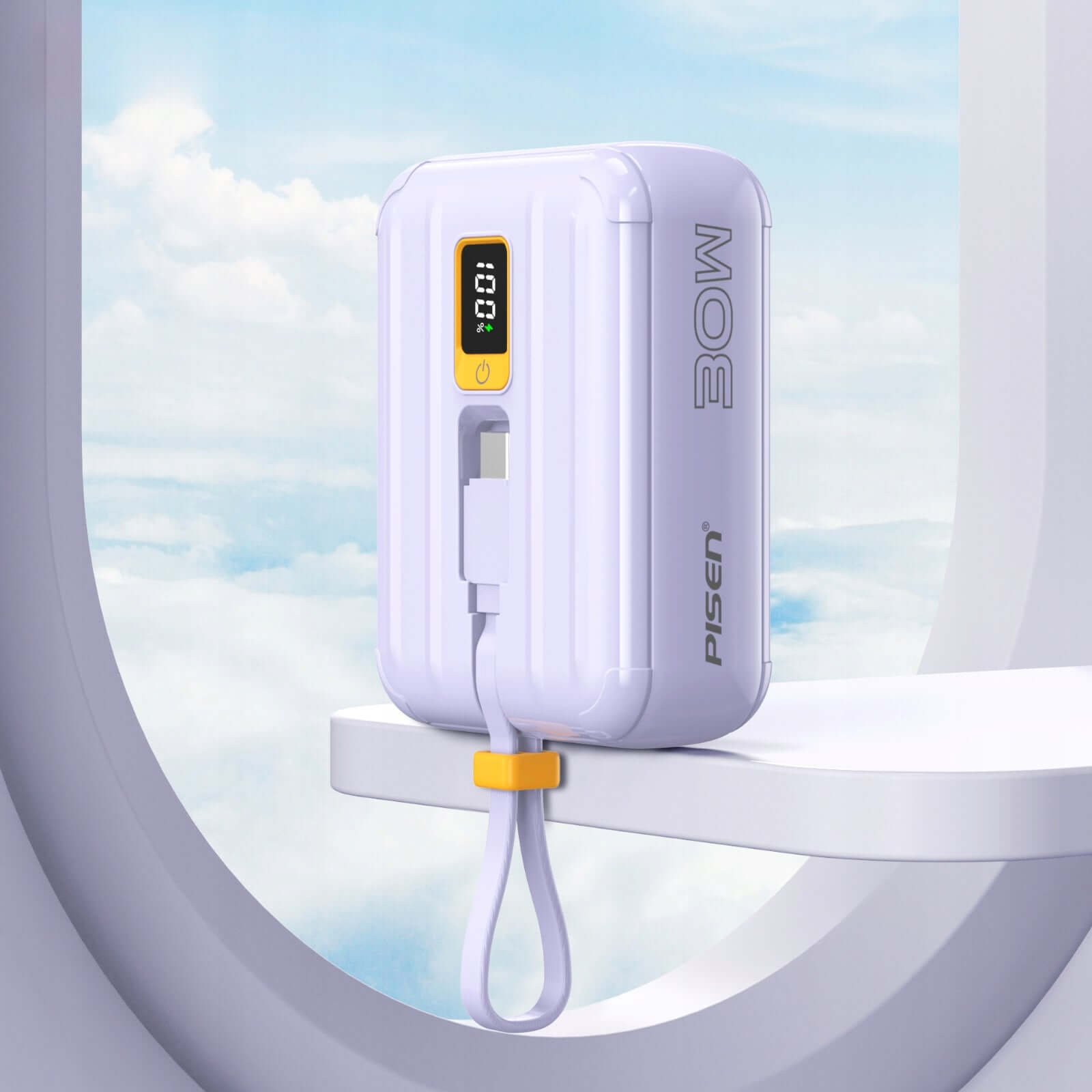
10,000 mAh · 30 W · built-in USB-C cable
A small power bank with a built-in USB-C cable, so there is no separate cable to forget. 30 W charges a phone quickly, and the capacity is well under the 100 Wh airline limit.

2. Anker 20000 mAh 87 W
20,000 mAh · 87 W · built-in USB-C cable
A power bank that also charges a laptop: up to 65 W for one device and 87 W in total. It has a built-in USB-C cable plus extra USB-C and USB-A ports.
Summary
A power bank is a practical power source when traveling and for everyday use. When choosing a specific model, the key factors are capacity, output port power, supported fast charging standards, and device dimensions suited to how you carry it.
Sources
- FAA: PackSafe - Lithium Batteries - manufacturer page (faa.gov)
- TSA: Lithium batteries with 100 watt hours or less - industry article (tsa.gov)
- USB-IF: USB Charger (USB Power Delivery) - industry article (usb.org)
- Google: Charge your Pixel phone - industry article (support.google.com)

Leave a comment
This site is protected by hCaptcha and the hCaptcha Privacy Policy and Terms of Service apply.