





Power supply for RTX 5060?
For the GeForce RTX 5060, you need a power supply of at least 550 W. This is the official figure provided by NVIDIA, based on a configuration with a powerful Ryzen 9 9950X processor, as the card itself has a TGP of 145 W. However, if your PC runs a more power-hungry CPU, such as the Core i7-14700K or Core i9-14900K, it is safer to choose a 650 W model.
| CPU | CPU while gaming | GPU + CPU while gaming | Our PSU pick |
|---|---|---|---|
| Ryzen 7 7800X3D | 58 W | 203 W | 550 W |
| Ryzen 5 9600X | 75 W | 220 W | 550 W |
| Ryzen 7 9700X | 77 W | 222 W | 550 W |
| Ryzen 7 9800X3D | 80 W | 225 W | 550 W |
| Core Ultra 7 265K | 93 W | 238 W | 550 W |
| Ryzen 7 9850X3D | 102 W | 247 W | 550 W |
| Core Ultra 9 285K | 111 W | 256 W | 550 W |
| Ryzen 9 9950X3D | 126 W | 271 W | 550 W |
| Ryzen 9 9950X (GPU maker's reference setup) | 132 W | 277 W | 550 W |
| Core i9-14900K | 166 W | 311 W | 650 W |
| Core i7-14700K | 178 W | 323 W | 650 W |
CPU power: TechPowerUp, average of 14 games, CPU only. GPU: board power from the manufacturer (RTX 5060: 145 W). Motherboard, memory, drives and fans draw extra, hence the headroom in the pick.
CPU power consumption: TechPowerUp, 14-game average, CPU only. GPU power consumption: manufacturer rated power (RTX 5060: 145 W). Motherboard, memory, drives, and fans consume additional power, hence the buffer in the recommendation.
The table above compares the power requirements of the RTX 5060 paired with popular CPUs on the market. Our rule is never to drop below the baseline minimum of 550 W.
Is 550 W enough and what about smaller units?
A 550 W power supply will easily handle the RTX 5060 in most typical gaming rigs. TechPowerUp measurements for the Zotac RTX 5060 Solo 8 GB show that the card consumes an average of 135 W in games. However, very brief power spikes lasting around 20 ms can reach up to 171 W.
A good-quality 550 W power supply handles these transient spikes effortlessly. It is a different story if you are considering a 500 W unit. That wattage falls below the official minimum specified by NVIDIA, so we do not recommend it for a new build or an upgrade.
It is also worth checking how much power your CPU consumes. According to TechPowerUp testing across 14 games, the Ryzen 7 7800X3D draws an average of 58 W through the EPS connector, the Ryzen 5 9600X pulls 75 W, the Ryzen 7 9700X requires 77 W, and the Ryzen 7 9800X3D consumes 80 W. Newer chips also maintain reasonable power draw: the Core Ultra 7 265K is at 93 W, the Ryzen 7 9850X3D draws 102 W, the Core Ultra 9 285K uses 111 W, and the Ryzen 9 9950X3D settles for 126 W.
The Ryzen 9 9950X consumes 132 W in games, which is the baseline NVIDIA used to recommend a 550 W power supply. The situation changes with 14th-generation Intel processors, where the Core i9-14900K reaches 166 W, and the Core i7-14700K goes up to 178 W. Because these units consume more power in gaming than the Ryzen 9 9950X, we recommend a 650 W power supply for them.
Component overclocking is another matter. A guide from manufacturer MSI from September 2025 indicates that for standard gaming with the RTX 5060, 550 W is sufficient with any CPU. However, if you plan to overclock, MSI recommends 600 W for Ryzen 5 and Core Ultra 5 chips, 650 W for Ryzen 7 and Core Ultra 7, and 750 W for the top-tier Ryzen 9 and Core Ultra 9.
Connectors and connection: 8-pin or 12V-2x6 cable?
To properly connect the RTX 5060, you need a single standard 8-pin PCIe cable or a new PCIe Gen 5 (12V-2x6) cable rated for at least 300 W. The card does not require you to buy a new power supply with a 12V-2x6 connector, as an adapter is included in the box.
If your power supply features traditional 6+2-pin cables, you can easily plug the card in directly or using the included adapter. In its official specifications, NVIDIA recommends using power supplies compliant with the PCIe CEM 5.1 standard.
The new 12V-2x6 connector is convenient because it replaces multiple cables with a single lead. If you are building a PC from scratch, it is worth choosing a power supply that already includes this cable out of the box.
Fun fact: the 12V-2x6 connector replaced the earlier 12VHPWR. According to Corsair, the sense pins are 1.5 mm shorter, and the power terminals are 0.25 mm longer, so the card receives full power only when the plug is fully seated.
Below are power supplies that meet NVIDIA's requirements for the RTX 5060.
Recommended power supplies for the RTX 5060
As an Amazon Associate I earn from qualifying purchases.

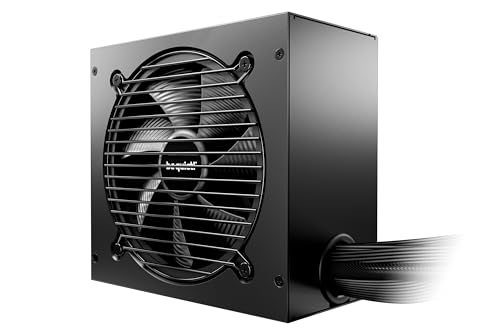
1. be quiet! Pure Power 12 550W
550 W · 80 PLUS Gold · PCIe 5.1 · 10-year warranty
Quiet power supply with a 120 mm fan and 80 PLUS Gold certification. Includes a 12V-2x6 cable and 6+2-pin cables, so it works with any graphics card connector. Cables are fixed (non-modular).

2. Corsair RM650e (2025)
650 W · Cybenetics Gold · ATX 3.1 · modular
Fully modular, so you only plug in the cables you actually need. Includes a 12V-2x6 cable and Zero RPM mode, which keeps the fan silent under light loads. 7-year warranty.

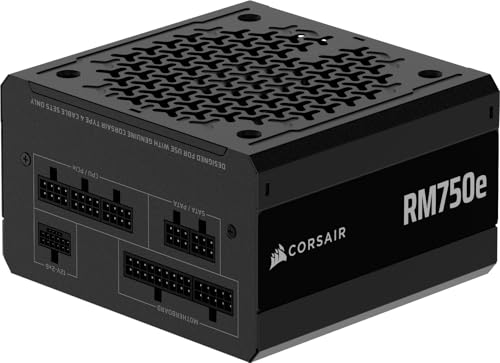
3. Corsair RM750e (2025)
750 W · Cybenetics Gold · ATX 3.1 · 12V-2x6 600 W
Fully modular, with a native 12V-2x6 cable rated up to 600 W and Zero RPM mode. A solid choice if you want headroom for a more powerful processor or your next GPU upgrade. 7-year warranty.
What to look for when choosing a power supply?
The first aspect is compliance with the ATX 3.1 and PCIe 5.1 standards. Designs built according to these guidelines, such as the be quiet! Pure Power 12 series, easily handle sudden power spikes of up to twice the rated power of the power supply. This ensures the stability of the entire computer during dynamic gameplay moments.
The second aspect is energy efficiency confirmed by certification. Choose models with 80 PLUS Gold or Cybenetics Gold certification, which feature lower energy losses converted into heat. As a result, the fan in the power supply can run quieter, which you will appreciate during evening sessions at your computer.
Also pay attention to the length of the manufacturer's warranty and cable management. Reputable power supplies offer from 7 years of warranty, like the Corsair RMe series, up to 10 years, as in the case of the Pure Power 12. Modular models allow you to connect only the cables you actually need, making it easier to keep the inside of the case tidy.
The 650 W version provides additional power headroom if you want to upgrade your processor to a more powerful model or install a higher-tier graphics card later on. Corsair RM650e power supplies offer fully modular cabling and a Zero RPM mode, in which the fan does not spin at all under low computer load.
Frequently Asked Questions
Is a 550 W power supply enough for the RTX 5060?
Yes, a 550 W power supply is officially recommended by NVIDIA for configurations with this card. It will easily handle a PC with most gaming processors, such as Ryzen 5 or Ryzen 7. A higher wattage is worth considering only with very power-hungry Intel Core i7 or i9 units and when planning to overclock.
Is a 500 W power supply enough for the RTX 5060?
A 500 W power supply has a lower wattage than the official 550 W minimum specified by the graphics card manufacturer. For this reason, we do not recommend purchasing a unit with such wattage for the RTX 5060. During sudden power spikes reaching 171 W, there might not be a safe margin for the remaining components.
Which power supply for RTX 5060 and Ryzen 7 7800X3D?
A branded 550 W power supply is completely sufficient for such a combination. The Ryzen 7 7800X3D processor is very energy-efficient and, according to tests, draws an average of just 58 W in games. Together with the card drawing an average of 135 W, the entire build will maintain a very large stability margin on a 550 W unit.
Does the RTX 5060 need a 12V-2x6 cable?
The card does not strictly require a power supply with a native 12V-2x6 cable. A single traditional 8-pin PCIe cable or a PCIe Gen 5 cable of at least 300 W is sufficient to power it. If your power supply does not have the new plug type, you can use the adapter included by the manufacturer with the card.
Is it worth buying a 650 W power supply for the RTX 5060?
Yes, buying a 650 W power supply is a sensible move if you want headroom for a future graphics card upgrade or a more powerful processor. We also recommend choosing 650 W when your computer is powered by a Core i7-14700K or Core i9-14900K, as well as if you plan to overclock your components.
Sources
- NVIDIA: GeForce RTX 5060 family - specifications - manufacturer page (nvidia.com)
- TechPowerUp: NVIDIA GeForce RTX 5060 8 GB review - power consumption - industry article (techpowerup.com)
- TechPowerUp: AMD Ryzen 7 9850X3D review - power consumption and efficiency - industry article (techpowerup.com)
- MSI: Recommended PSU table for NVIDIA 30/40/50 series - industry article (msi.com)
- Corsair: Evolving standards - 12VHPWR and 12V-2x6 - industry article (corsair.com)
- be quiet!: Pure Power 12 - manufacturer page (bequiet.com)
- Corsair: RMe Series 2025 - manufacturer page (corsair.com)

Leave a comment
This site is protected by hCaptcha and the hCaptcha Privacy Policy and Terms of Service apply.