





Updated: 07.10.2026
As an Amazon Associate I earn from qualifying purchases.
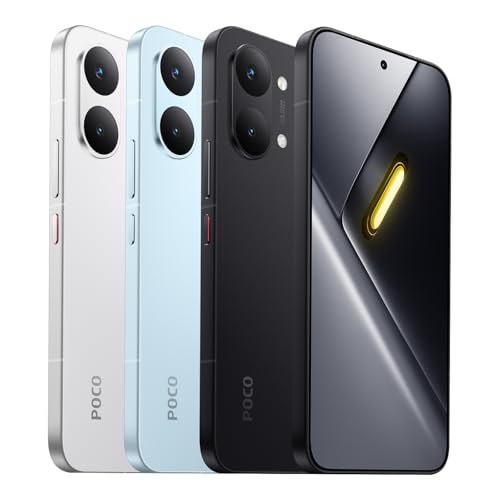
Quick answer: Which charger for POCO X8 Pro Max? The best choice is XIAOMI 120W HyperCharge Combo Type-A EU Ultra-Fast Wall Charger 120 W - about 100% of the maximum charging speed (phone: max 100 W).
See XIAOMI 120W HyperCharge Combo Type-A EU Ultra-Fast Wall Charger on Amazon →

Which charger for POCO X8 Pro Max? Guide to picking the right 100W plug
The POCO X8 Pro Max supports an impressive 100W charging ceiling, but taking advantage of that speed requires the right adapter. To hit full speed, the phone relies on either Xiaomi HyperCharge or open USB PD PPS protocol at up to 20V and 5A.
If you are wondering which charger for POCO X8 Pro Max to buy after unboxing your phone, you are in the right spot. In European retail packages, POCO includes a USB-C cable but leaves out the charging brick, so finding a solid wall adapter is step one.
Fun fact: PPS stands for Programmable Power Supply, a modern extension of the USB Power Delivery standard that allows the phone to negotiate exact voltage and current every few seconds to feed maximum power without unnecessary heat.
Specs and charging
The key POCO X8 Pro Max specs that matter when choosing a charger:
- Battery: 8500 mAh
- Wired charging: 100 W (Xiaomi HyperCharge 100 W)
- Reverse charging: 27 W

Will your old wall plug work with this phone?
Before spending money on a brand-new plug, check what you already have at home. Look at the tiny text printed on the side of your existing power bricks to see their supported voltages and protocols.
- USB-C laptop charger (65W or higher): If it only supports standard USB PD without PPS, your phone will charge safely, but at a noticeably slower pace. Without the required 20V/5A PPS step, it will not deliver its maximum 100W potential.
- Standard 20W phone adapter (like older iPhone plugs): It will charge the battery steadily overnight, but it is far too weak for a rapid daytime top-up.
- Third-party PPS chargers capped at 3A: Many common multi-port adapters offer PPS but only up to 3A (such as 11V/3A or 20V/3A). With this phone, those bricks will top out around 50W to 55W rather than the full 100W.

Real charging speeds: how fast does the battery fill up?
Having 100W support translates directly to fast real-world turnarounds. According to official manufacturer specifications, a compatible 100W charger pushes the battery from empty to 50% in just 24 minutes.
Independent testing by GSMArena shows that a quick 15-minute plug-in already gives you 37% battery. Leave it plugged in for half an hour, and you sit comfortably at 65%, while a complete top-up to 100% takes roughly 52 minutes.
In everyday life, this means you no longer need to leave your phone plugged in overnight. A quick session while you drink your morning coffee or pack your bag provides enough battery for the rest of your workday.
Picking your new adapter: matching the right brick to your routine
If your drawer only contains basic chargers, getting an adapter that fits this phone's power profile is an easy upgrade. If you simply want the fastest possible charge at the lowest price, the XIAOMI 120W HyperCharge Combo Type-A EU Ultra-Fast Wall Charger is the natural pick, running the phone at its full 100W capacity.
For people carrying multiple gadgets, the UGREEN Nexode 100W is an outstanding alternative. It features 4 ports, delivers the full 100W to your POCO X8 Pro Max, and packs enough muscle to run a USB-C laptop alongside your phone.
If you prefer compact multi-port bricks from other lines, keep their profile limits in mind. The Anker Nano 100W delivers roughly 55W to this phone, the Anker 735 (Nano II 65W) gives around 52W, and the UGREEN Nexode 65W tops out near 49.5W. All three charge a laptop easily and power the phone reliably, but will not reach the absolute top speed.
| Charger | Power | Estimated speed |
|---|---|---|
| XIAOMI 120W HyperCharge Combo Type-A EU Ultra-Fast Wall Charger | 120 W | 100% |
| UGREEN Nexode 100W | 100 W | 100% |
| Anker Nano 100W (3 Ports, Smart Display) | 100 W | 55% |
| Anker 735 (Nano II 65W) | 65 W | 52% |
| UGREEN Nexode 65W | 65 W | 50% |

1. XIAOMI 120W HyperCharge Combo Type-A EU Ultra-Fast Wall Charger (120W)
Original XIAOMI charger · Cheapest at full speed · Enough power for a USB-C laptop
120W charger. With the POCO X8 Pro Max it charges at up to about 100 W via HyperCharge (100% of the phone's maximum power, estimate based on specs and protocols).
See XIAOMI 120W HyperCharge Combo Type-A EU Ultra-Fast Wall Charger on Amazon →
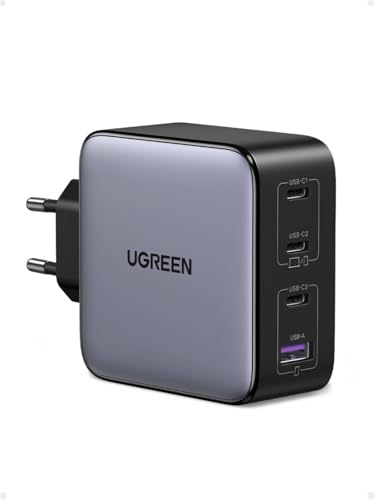
2. UGREEN Nexode 100W (100W GaN)
4 ports - several devices at once · Enough power for a USB-C laptop
100W GaN charger. With the POCO X8 Pro Max it charges at up to about 100 W via USB PD PPS (100% of the phone's maximum power, estimate based on specs and protocols).

3. Anker Nano 100W (3 Ports, Smart Display) (100W GaN)
3 ports - several devices at once · Enough power for a USB-C laptop
100W GaN charger. With the POCO X8 Pro Max it charges at up to about 55 W via USB PD PPS (55% of the phone's maximum power, estimate based on specs and protocols).
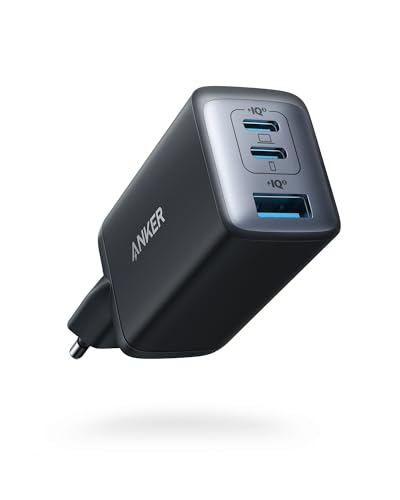
4. Anker 735 (Nano II 65W) (65W GaN)
3 ports - several devices at once · Enough power for a USB-C laptop
65W GaN charger. With the POCO X8 Pro Max it charges at up to about 52 W via USB PD PPS (52% of the phone's maximum power, estimate based on specs and protocols).

5. UGREEN Nexode 65W (65W GaN)
3 ports - several devices at once · Enough power for a USB-C laptop
65W GaN charger. With the POCO X8 Pro Max it charges at up to about 49.5 W via USB PD PPS (50% of the phone's maximum power, estimate based on specs and protocols).
Watch out for PPS current limits and model confusion
The biggest trap with this phone is the amperage requirement. To reach 100W over universal standards, the POCO X8 Pro Max demands a PPS window of up to 20V at 5A. If a 100W charger caps its PPS output at 3A, the phone automatically negotiates a lower power bracket.
On standard USB PD plugs that lack PPS support altogether, charging will work fine, but you will experience significantly longer wait times. Fast charging protocols from other brands like OnePlus or Oppo will also fall back to basic charging.
Lastly, double-check your device name when looking for accessories. The POCO X8 Pro Max has different dimensions and power requirements than the smaller, standard POCO X8 Pro.
POCO X8 Pro Max charging: key questions answered
Which charger for POCO X8 Pro Max delivers the full 100W speed?
To hit the maximum 100W speed, use an original Xiaomi HyperCharge adapter like the XIAOMI 120W HyperCharge Combo or a universal USB PD PPS charger capable of 20V and 5A, such as the UGREEN Nexode 100W.
Does the POCO X8 Pro Max come with a charger in the box?
In the European market, the wall charger is not included in the retail packaging. You get a USB-C cable in the box, but you must supply your own compatible charging brick.
Can I safely charge this phone with my USB-C laptop adapter?
Yes, you can safely use any standard USB-C laptop charger. Modern adapters automatically negotiate safe power levels, though the phone will charge slower if the laptop plug lacks a 5A PPS profile.
How long does a full recharge take in real life?
With an appropriate 100W adapter, testing by GSMArena shows the phone reaches 37% in 15 minutes, 65% in 30 minutes, and reaches 100% in roughly 52 minutes.
Does the standard POCO X8 Pro use the same charger?
While basic USB-C chargers will power both, the POCO X8 Pro is a different, smaller model with distinct battery and hardware specifications. Always verify your exact model name when matching charging accessories.
Chargers for the other models in this series
- Which charger for POCO X8 Pro - ranking of compatible chargers
- Which charger for POCO F9 Pro - compatibility test and power
- Which charger for POCO F9 Ultra - ranking of compatible chargers
Sources
- POCO X8 Pro Max - mi.com - official manufacturer specifications (mi.com)
- POCO X8 Pro Max - gsmarena.com - industry article (gsmarena.com)
- POCO X8 Pro Max - gsmarena.com - industry article (gsmarena.com)
- POCO X8 Pro Max - nextrift.com - industry article (nextrift.com)



Leave a comment
This site is protected by hCaptcha and the hCaptcha Privacy Policy and Terms of Service apply.